Quick answer
- Best month to visit Deosai: July for wildflowers and bears, September for clear skies
- Open: roughly June to September only, snowbound the rest of the year
- Distance: ~40 km from Skardu, 2.5–3 hours by 4x4
- Altitude: 4,114 m average, 4,250 m at Sheosar Lake
- Vehicle: 4x4 essential, a sedan cannot make the climb
What Deosai actually is
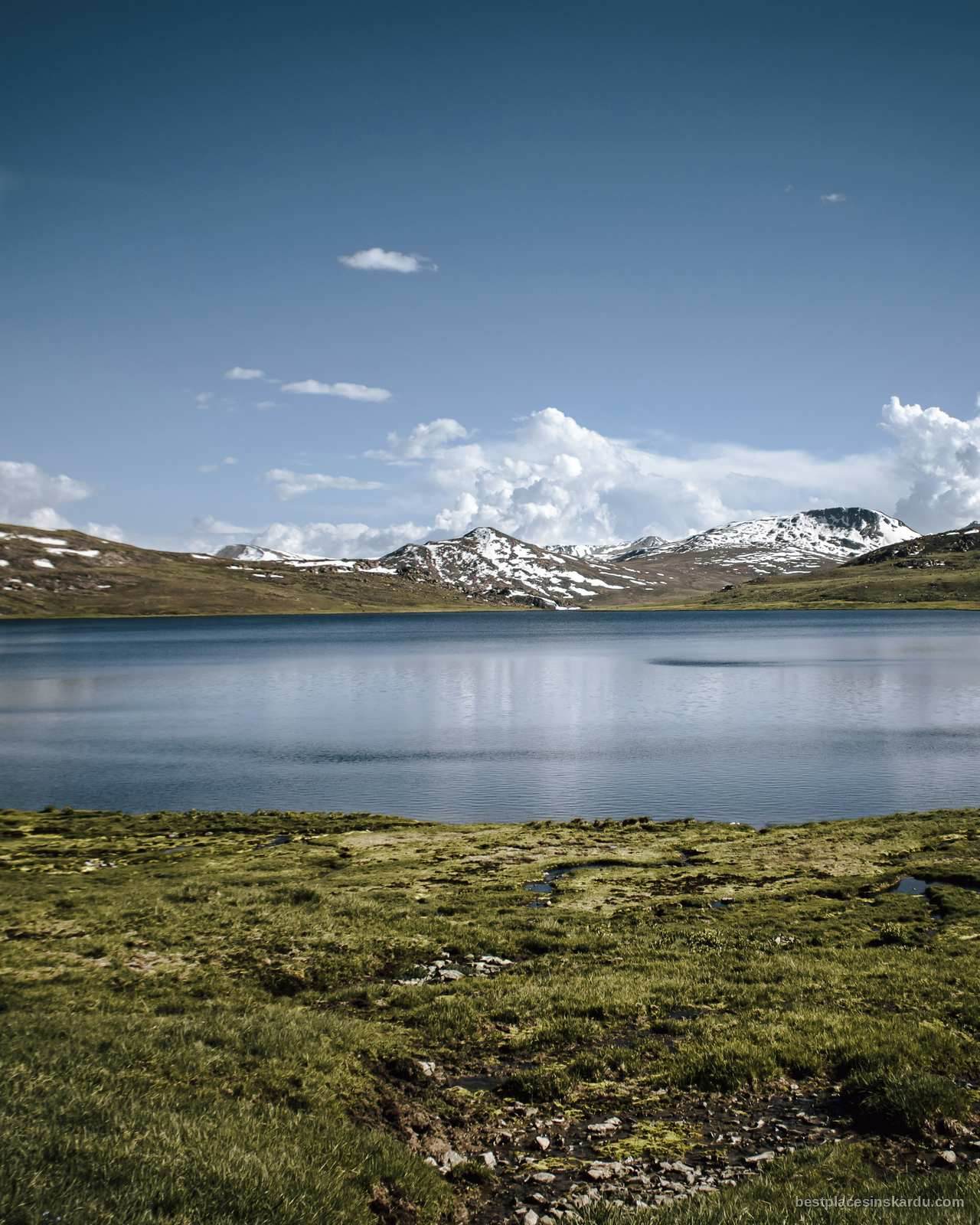
Deosai, "land of giants" in Balti tradition, is a rolling, almost entirely treeless plateau averaging 4,114 metres, making it the second-highest plateau on Earth after Tibet's Changtang. It covers roughly 3,000 square kilometres (358,400 hectares) between Skardu and Astore, was declared a national park in 1993 and sits on Pakistan's UNESCO World Heritage tentative list. There is no permanent settlement inside the park.
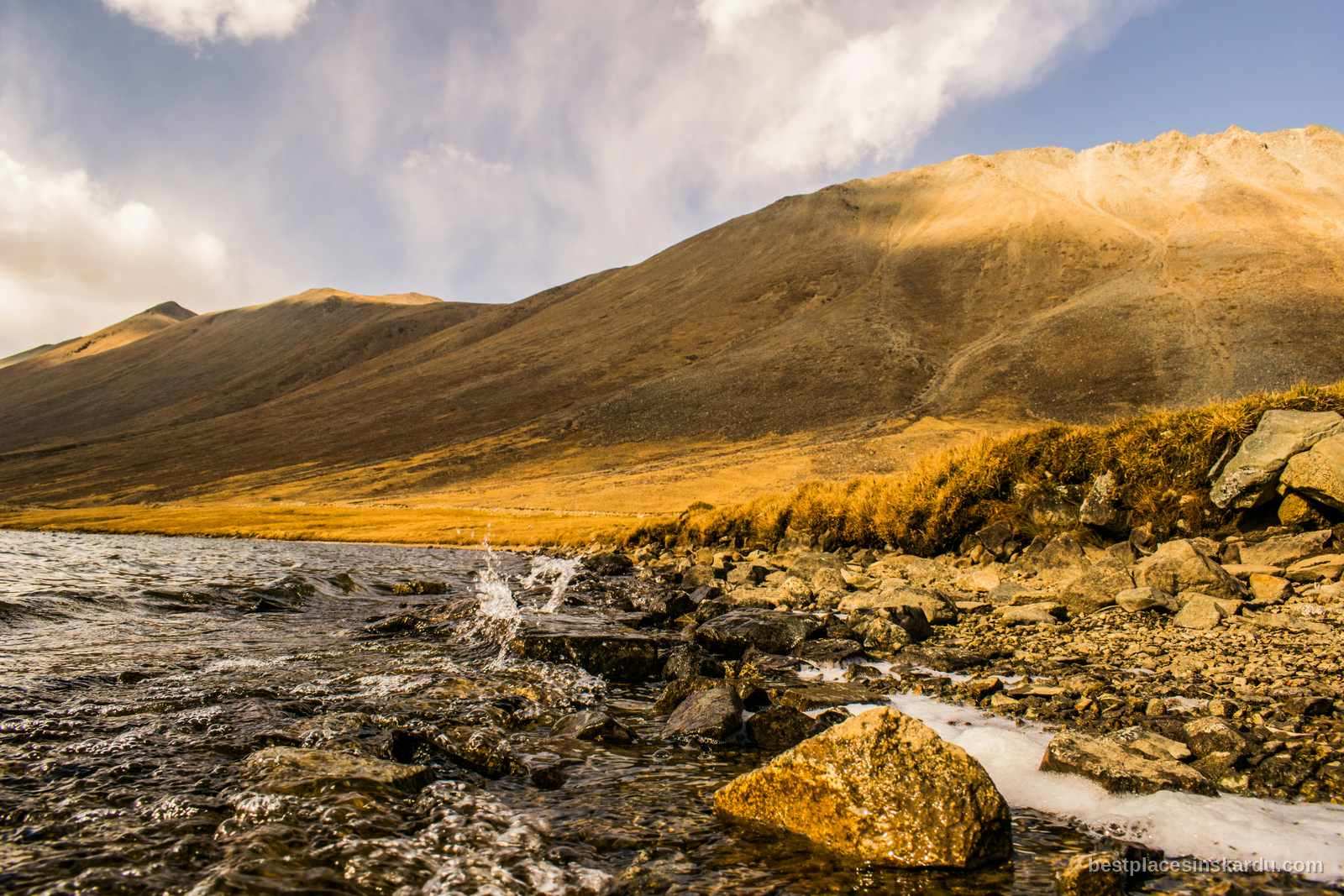
What makes the rough drive worth it is the scale. Once you crest the pass above Satpara Lake the landscape opens into a horizon-to-horizon expanse of grass and streams with almost nothing vertical to break the view, a disorienting contrast to the narrow, walled-in valleys everywhere else in Baltistan.
How to get there from Skardu
The route, stop by stop
The route runs Skardu → Satpara Lake → Ali Malik Top → Bara Pani → Sheosar Lake, climbing on an unpaved jeep-only track for the second half. A 4x4 is effectively required. Allow 2.5–3 hours each way, and leave Skardu by 7am. Light, wildlife activity and track conditions are all better early.
Altitude warning. Deosai sits roughly 2,000 metres above Skardu town. Even in August expect a 10–15°C temperature drop, fast weather changes and mild breathlessness on exertion. Pack an insulated jacket regardless of how warm Skardu felt that morning, and do not attempt Deosai on your arrival day.
Is Deosai open right now?
Every other guide tells you "June to September" and leaves you guessing. This panel works out today's actual status from the calendar and live conditions on the plateau. Because the road opens and closes with snowmelt, and the dates shift by a week or two every year.
The drive: altitude profile from Skardu to Sheosar Lake
Deosai is only 40 km from Skardu, but you climb over 2,000 metres to get there. This is the part that catches people out. The numbers below are why an insulated jacket is not optional and why you should not attempt Deosai on your arrival day.
Elevations are approximate. The steep section between Satpara and Ali Malik Top is where most of the climb happens. And where passengers usually first notice the thinner air.
Altitude symptoms on a Deosai day trip
There is no medical facility on the plateau. The nearest are in Skardu. See medical facilities in Skardu.
Wider regional safety guidance, including for solo and female travellers, is on our Skardu safety page.
Deosai is not extreme altitude, but 4,250 m is high enough that mild acute mountain sickness is common on a same-day trip from Skardu. You gain over 2,000 metres in under three hours, which is faster than any acclimatisation guideline recommends.
| Symptom | What it means | What to do |
|---|---|---|
| Mild headache, slight breathlessness | Normal at this elevation | Water, rest, slow down |
| Nausea, dizziness, poor sleep | Mild AMS | Stop climbing, rest; descend if it worsens |
| Vomiting, confusion, loss of coordination | Serious, do not wait | Descend immediately |
Practical steps: don't visit Deosai on your arrival day in Skardu, drink more water than feels necessary, avoid alcohol the night before, and eat something before the climb. Tell your driver if you feel unwell. Descending 500 metres usually resolves mild symptoms quickly. If you want to assess symptoms properly before or during the trip, our High Altitude Guide walks through an AMS symptom score and the warning signs that need descent. This is general travel information, not medical advice; if you have heart or lung conditions, speak to a doctor before travelling to high altitude.
Two routes into Deosai: Skardu or Astore
If you are arriving overland rather than flying, the Astore approach sits on the road you come in on. See Islamabad to Skardu for the full route and where Astore falls along it.
Almost every guide assumes you are coming from Skardu, but there are two entry points and they are truly different journeys. Choosing the right one matters more than most visitors realise.
| Skardu side | Astore side | |
|---|---|---|
| Entry point | Satpara Lake, then Ali Malik Top | Chilam village, via Chilim Pass |
| Road surface | Rough, unpaved for the second half | Smoother; car-friendly for much of it |
| Vehicle | 4x4 essential | 4x4 still advised, but less demanding |
| Drive time to Sheosar | 2.5–3 hrs | Roughly 2 hrs from Chilam |
| Best for | Day trips, Skardu-based itineraries | Anyone arriving overland from Islamabad |
| Last supplies | Skardu city | Chilam village or Astore Bazaar |
Which should you take? If you are basing yourself in Skardu, use the Satpara route. It is the shorter approach and puts you at Sheosar mid-morning. If you are driving up from Islamabad on the Karakoram Highway, Astore comes first and the Chilam approach is gentler on both vehicle and passengers. Many travellers cross the plateau entirely, entering one side and exiting the other.
The full crossing takes a long day and should not be attempted late in the afternoon. See our Skardu map and distances page for how Deosai sits relative to everything else.
Stops along the plateau
Satpara Lake, where the sealed road ends, is worth a stop in its own right on the way up. It features in our guide to the best places to visit in Skardu.
Deosai is not a single viewpoint, the crossing has recognised stopping points, and knowing them helps you plan the day rather than driving past.
- Ali Malik Top – the pass you crest coming from Satpara. First full view of the plateau, and the point where the landscape changes completely.
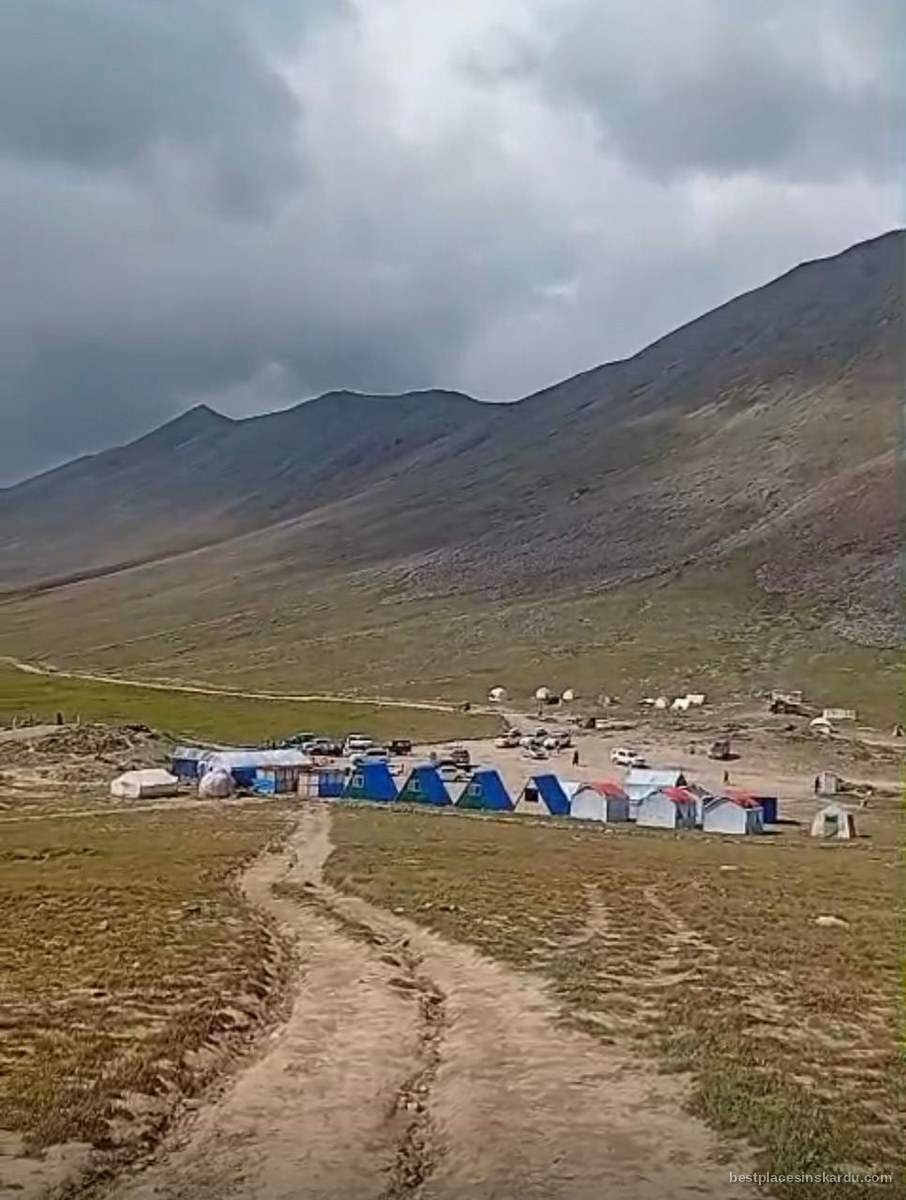
- Bara Pani ("big water") – a river crossing roughly midway, with seasonal tea stalls and the most reliable brown bear sightings. Most camping happens near here.
- Kala Pani ("black water") – a second stream crossing further on, popular for photographs and a common lunch halt.
- Sheosar Lake – the turnaround point for most day trips, at 4,250 m near the western edge.
- Chilam – the last village on the Astore side, where you can buy supplies or stay.
Camping in Deosai
If camping is not for you, Khaplu and Kharmang both make good overnight alternatives on the eastern side of the region.
A day trip from Skardu means roughly six hours of driving for a few hours on the plateau. Camping overnight solves that. And Deosai after dark is the real reason to do it. At over 4,000 metres with effectively zero light pollution, the night sky is among the best accessible anywhere in Pakistan.
Practical points if you camp:
- Where: Bara Pani is the established camping area, with seasonal tented camps operating through July and August. Wild camping is possible but should be arranged through an operator.
- Temperature: nights drop near or below freezing even in July. A three-season sleeping bag is not enough. Bring a four-season bag and an insulated mat.
- Bring everything: food, water or purification, fuel, and a first-aid kit. Facilities are limited to a handful of seasonal stalls.
- Bears: store food securely and never leave it in an open tent. Sightings near camps are uncommon but the population is truly wild.
- Book ahead in August – the seasonal camps fill during peak season.
The payoff is sunrise. Low light across the plains, mist over the streams, and wildlife active before the first vehicles arrive from Skardu.
Wildlife in Deosai National Park
Deosai was declared a national park in 1993 specifically to protect the Himalayan brown bear (Ursus arctos isabellinus), a species the IUCN now lists as critically endangered. The park holds the only stable population in Pakistan.
The conservation story is one of Pakistan's genuine successes, though published figures vary by source and survey method. The UNDP-supported Deosai Brown Bear Project recorded a rise from roughly 19 bears in 1993 to 26 by the late 1990s. More recent figures reported by the Gilgit-Baltistan Wildlife Department and cited in bear-research literature put the park's population at around 70 to 75 animals, roughly one bear per 35 km². Estimates outside Deosai suggest only 150–200 brown bears survive across all of Pakistan, spread over seven fragmented populations, which is what makes this single plateau so significant.
The Himalayan Wildlife Foundation was instrumental in creating the park, working with the wildlife department and surrounding villages on a model that combined zoning, anti-poaching enforcement and community employment. Bara Pani is considered the core bear habitat within the park.
Beyond the bears, the plateau supports a wider range of species than most visitors expect:
| Group | Species you may see | Likelihood |
|---|---|---|
| Large mammals | Himalayan brown bear, Himalayan ibex, grey wolf, musk deer | Bears occasionally; others rare |
| Small mammals | Golden marmot, Tibetan red fox | Marmots very common |
| Birds of prey | Golden eagle, bearded vulture, peregrine falcon, lugger falcon | Regular |
| Other birds | Himalayan snowcock, various waterfowl at Sheosar | Common |
| Rarely seen | Snow leopard, markhor | Very rare |
Your realistic odds of seeing a bear
Golden marmots are the animal you will almost certainly see. They sit upright beside the track in large numbers through summer. For bears, your best odds are early morning or late evening near Bara Pani, in July or August, and always at distance. This is protected habitat, not a safari park: stay in the vehicle, keep quiet, and never approach or feed wildlife.
Wildflowers on the plateau
For a completely different landscape on the same trip, the dunes at Sarfaranga Cold Desert sit on the opposite side of Skardu and take half a day.
From late June through July, Deosai's grasslands fill with wildflowers. The plateau is sometimes described as a carpet of colour, and the display peaks in the first half of July. It is short-lived; by mid-August the colour has largely faded to gold. If wildflowers are your reason for going, target early July and accept that the track will be at its muddiest.
Photography in Deosai
Deosai rewards preparation more than most destinations, because the light and the distances both work against a casual approach.
- Wildlife: a 300mm or longer telephoto is realistically the minimum. Bears are observed at distance and anything shorter produces a dot in a field.
- Landscape: a wide angle suits the plateau's scale, but the flat horizon needs foreground. Streams, flowers or the track itself, or images read as empty.
- Sheosar Lake: best at sunrise, when wind is lowest and the reflection is cleanest. This effectively requires camping.
- Astrophotography: the altitude, dry air and absence of light pollution make this one of Pakistan's best night-sky locations. Bring a tripod and shoot on a new moon.
- Protect your gear: dust on the track is constant and stream crossings throw water.
Where to stay near Deosai
Most visitors fit Deosai into a wider trip. Our 5-day Skardu itinerary places it on Day 3, the earliest sensible slot after arriving.
Your options
There are no hotels inside the park. Your options are seasonal tented camps near Bara Pani, or basing yourself outside and visiting for the day:
- Skardu city – the most common base, with the full range of accommodation. See our best hotels in Skardu guide, or cheap hotels if budget matters.
- Chilam or Astore – basic guesthouses on the Astore side, useful if you are approaching from the Karakoram Highway.
- Seasonal camps in the park – the only way to be on the plateau at sunrise and after dark.
What to pack
There is no restaurant on the plateau. Eat before you leave — restaurants in Skardu.
Check today's conditions on the plateau before you set out, we pull live data for Deosai separately from Skardu town, because the two differ by 10–15°C.
- Insulated jacket, even for a summer day trip. Temperatures near freezing at dawn
- Sunscreen and sunglasses, UV at this altitude is far stronger than the temperature suggests
- Water and snacks, only a couple of seasonal tea stalls near Bara Pani
- Cash, no card acceptance on the plateau
- Motion-sickness medication if you are prone to it; the climb is winding
Cost
Fill up before you leave Skardu. There is no fuel anywhere on the plateau — see petrol stations in Skardu.
The driver matters as much as the vehicle on this track. See how to check an operator is licensed before you book.
What it costs in 2026
Budget for a standard national park entry ticket plus your vehicle. A Prado-class 4x4 with driver runs roughly PKR 12,000 per day, a Land Cruiser V8 around PKR 22,000. Confirm whether fuel is included, since Deosai burns considerably more than a city day. Model the full trip on the trip cost calculator.
Sources
Been to Deosai recently? Road status and opening dates shift every year, tell us what you found and we will update this page.
Conservation figures on this page are cited rather than repeated from other travel sites, because published bear counts vary by survey method and year:
- Deosai Brown Bear Project, supported by the UNDP Small Grants Programme. Population recorded rising from 19 bears in 1993 to 26 by the late 1990s. UNDP SGP project record
- Nawaz et al., Pragmatic management increases a flagship species, the Himalayan brown bears, in Pakistan's Deosai National Park, Biological Conservation. ScienceDirect
- Species distribution modelling and landscape connectivity for the critically endangered Himalayan brown bear in Deosai National Park, Frontiers in Ecology and Evolution (2024). Frontiers
- Himalayan brown bear species profile, Bear Conservation. bearconservation.org.uk
Live weather data on this page is supplied by Open-Meteo. Distances and altitudes are cross-checked against mapping data. If you spot an error, please tell us.
Frequently asked questions
What is the best month to visit Deosai?
July is best for wildflowers and Himalayan brown bear sightings; September offers the clearest skies and fewest vehicles. Deosai is only open from roughly June to September.
Is Deosai open all year?
No. The jeep track is snowbound and impassable from around October to May. The park effectively operates a June to September season only.
Do I need a permit for Deosai National Park?
Pakistani nationals need only the standard park entry ticket bought at the gate. Foreign nationals should carry a passport and confirm current requirements before travelling.
Can I visit Deosai in a normal car?
No. The unpaved climb from Satpara Lake requires a 4x4. A sedan cannot safely make the ascent, and local operators will not attempt it.
How long does a Deosai day trip take?
A full day. Allow 2.5 to 3 hours each way plus time on the plateau. Most trips leave Skardu around 7am and return early evening.
Is Deosai safe for children?
Yes with precautions: an early start, warm layers and a driver experienced on the track. The altitude is moderate rather than extreme, but pace the day and watch for anyone unusually tired or breathless.
Can you reach Deosai from Astore instead of Skardu?
Yes. The Astore route enters via Chilam village and Chilim Pass, and is generally smoother and more car-friendly than the rough 4x4 track up from Satpara Lake near Skardu. It suits travellers arriving overland from Islamabad, since Astore comes first on the Karakoram Highway.
Can you camp in Deosai National Park?
Yes. Bara Pani is the established camping area, with seasonal tented camps operating through July and August. Nights drop near or below freezing even in summer, so a four-season sleeping bag is essential. Camping is the only way to see sunrise on the plateau or the night sky.
What wildlife lives in Deosai?
Deosai protects the Himalayan brown bear, which the IUCN lists as critically endangered. Published counts vary: the UNDP-backed Deosai Brown Bear Project recorded 19 bears in 1993 rising to 26 by the late 1990s, while more recent Gilgit-Baltistan Wildlife Department figures put the park at around 70 to 75 animals. You may also see golden marmots, which are very common, plus Tibetan red fox, Himalayan ibex, grey wolf, golden eagles and bearded vultures. Snow leopard and markhor are present but very rarely seen.
When do the Deosai wildflowers bloom?
From late June through July, peaking in the first half of July. By mid-August the colour has largely faded. Early July gives the best display, though the track is at its muddiest then.
How big is Deosai National Park?
Roughly 3,000 square kilometres, or 358,400 hectares, spread between the Skardu and Astore districts of Gilgit-Baltistan. It was declared a national park in 1993 and sits on Pakistan's UNESCO World Heritage tentative list.
Is Deosai open right now?
Use the live status panel near the top of this page. It works out today's status from the calendar and current conditions on the plateau. As a rule, Deosai is open from roughly mid-June to late September and snowbound the rest of the year, but opening and closing dates follow snowmelt and shift by a week or two each season, so always confirm with a local driver.
Can you get altitude sickness at Deosai?
Yes, mild altitude sickness is common. You climb over 2,000 metres from Skardu to Sheosar Lake in under three hours, which is faster than acclimatisation guidelines recommend. Mild headache and breathlessness are normal; nausea, dizziness or confusion mean you should descend. Do not visit Deosai on your arrival day in Skardu.
What is Deosai like in August?
August is the busiest month and the most reliable. The track has dried out after July, days are at their warmest and the road is comfortably open. Wildflowers have mostly faded to gold by mid-August, and the Bara Pani camps fill up. Nights still approach freezing.