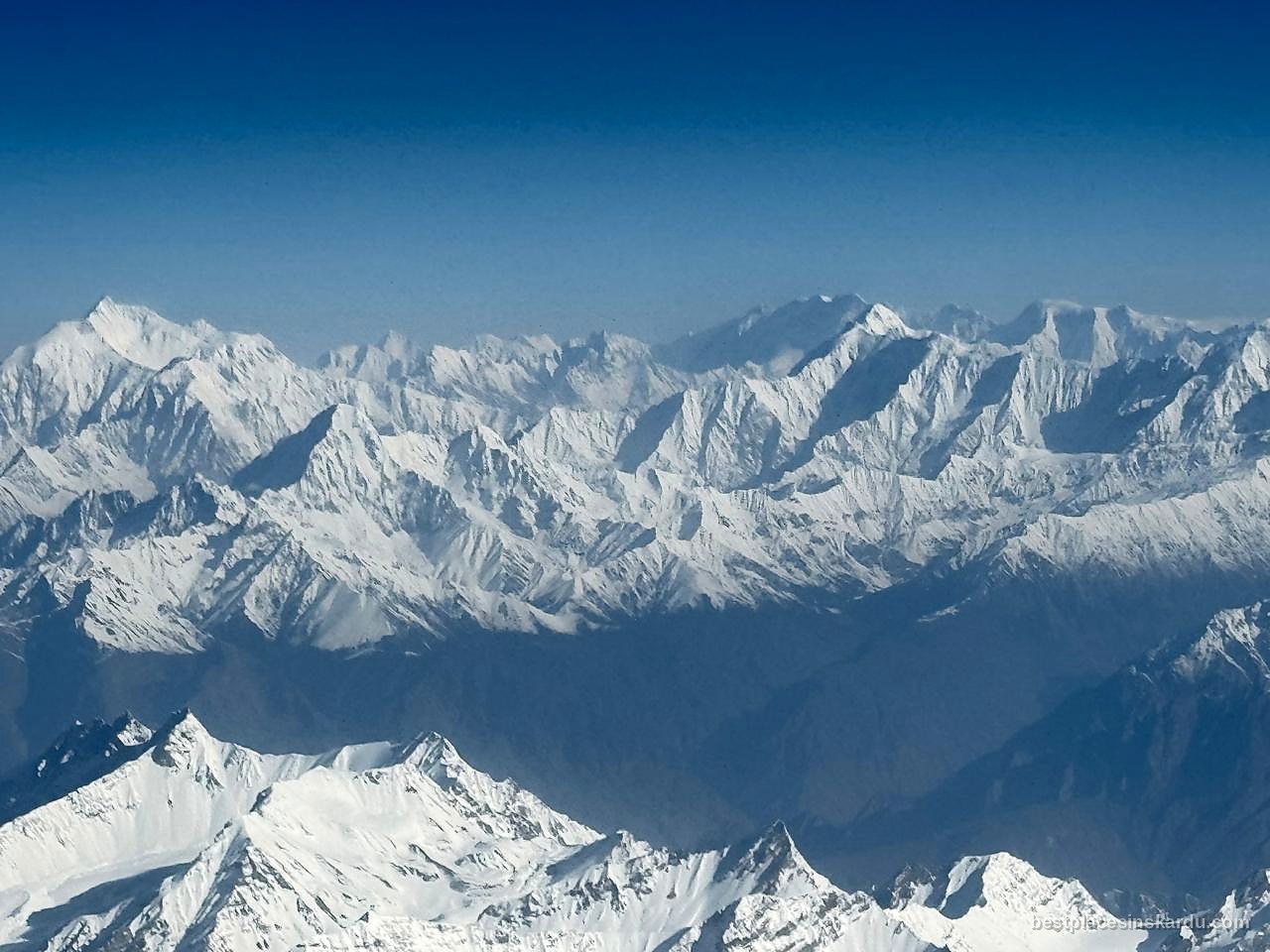
Quick answer: what the High Altitude Guide does
The High Altitude Guide is a web tool for assessing altitude illness at the point you need it, on a phone, in the valley or on the trail. It covers:
- AMS: a symptom assessment using the 2018 Lake Louise score, with severity-based next steps
- HACE and HAPE: screening for the warning signs of the two serious forms
- Altitude and SpO₂: context for where you are and what an oxygen reading means there
- Acclimatization: ascent rate and rest-day planning
- Emergency guidance: when descent and urgent care are needed
What is altitude sickness?
Altitude sickness, also called mountain sickness or elevation sickness, is illness caused by going up to high altitude faster than the body can adjust to the lower oxygen there. It takes three forms: acute mountain sickness (AMS), which is common and usually mild, and two rare but life-threatening forms, HACE, affecting the brain, and HAPE, affecting the lungs.
It is not the same as motion sickness, the nausea caused by movement in a car, boat or plane, although a long mountain drive can bring on both. The difference that matters is that altitude sickness depends on how high you are and how fast you got there, and it does not settle just because the vehicle stops.
What is acute mountain sickness (AMS)?
AMS is the most common form of altitude sickness. Its main symptom is headache, usually with loss of appetite, nausea or vomiting, dizziness or fatigue, typically starting within hours of arriving at a higher altitude. Unlike a viral illness, it does not cause fever, a runny nose, chills or muscle aches (CDC Yellow Book).
Chronic mountain sickness
Chronic mountain sickness, also called Monge's disease, is a different condition. It develops in people who have lived at high altitude for many years, not in visitors, and involves an excess of red blood cells (polycythaemia) with low blood oxygen. Symptoms include headache, dizziness, breathlessness, poor sleep and fatigue, and moving to low altitude relieves it (international consensus statement, 2005). The High Altitude Guide is built for acute altitude illness in people who travel or work at altitude.
Why altitude matters in Skardu and northern Pakistan
Most visitors arrive in Skardu from Islamabad, at around 500 m, and land at 2,228 m about an hour later. That first step up is modest. The larger one comes on day trips: the Deosai plateau at 4,114 m and Sheosar Lake at 4,250 m are reached in under three hours from town, a climb of about 2,000 m in a single morning. Trekkers heading beyond Askole towards the Baltoro Glacier go considerably higher, and stay there for days.
The CDC's travel health guidance puts it plainly: any unacclimatized traveller going to a sleeping altitude of about 2,450 m or more, and sometimes lower, is at risk of altitude illness (CDC Yellow Book 2026). Skardu town sits just below that level; almost every headline trip from it goes well above.
How people respond varies. Some feel nothing at Sheosar; others develop symptoms at far lower altitudes, and a person's past experience at altitude is only a partial guide to the next trip. That is why symptoms after going higher should not be written off as ordinary travel tiredness, a long drive or a poor night's sleep. At altitude, a new headache, nausea, unusual fatigue or breathlessness deserves to be considered as possible altitude illness first.
| Place | Elevation | Context |
|---|---|---|
| Islamabad | 507 m | Where most visitors start |
| Skardu town | 2,228 m | Arrival point by air or road |
| Shangrila / Lower Kachura | ~2,500 m | Day trip, 25 km |
| Satpara Lake | 2,636 m | First stop on the Deosai road |
| Khaplu | 2,600 m | Overnight base for Hushe |
| Basho Valley | ~2,900 m | Camping and overnight stays |
| Deosai plateau | 4,114 m | Reached in under 3 hours from town |
| Sheosar Lake | 4,250 m | Highest point of a normal Deosai day trip |
For how elevation changes the weather at each stop, see Skardu altitude and weather; for road distances and drive times, the Skardu map and distances.
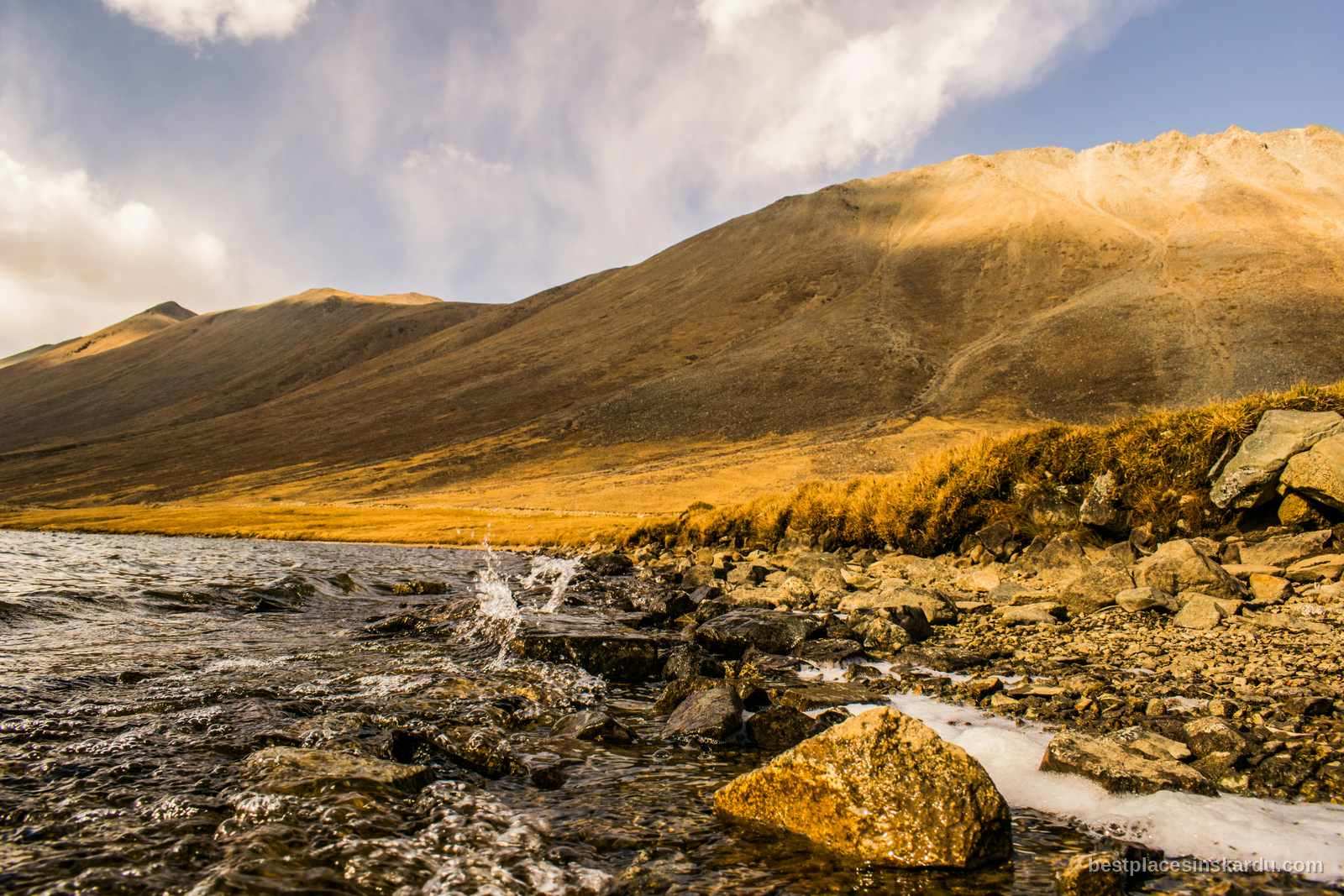
Symptoms of altitude sickness and acute mountain sickness
Altitude sickness comes in three forms. AMS is common and usually mild; HACE and HAPE are rare but life-threatening, and either can develop if warning signs are ignored.
| Condition | Main symptoms | What it calls for |
|---|---|---|
| Acute mountain sickness (AMS) | Headache, usually with loss of appetite, nausea or vomiting, dizziness or fatigue, after going higher | Do not go higher with symptoms; rest at the same altitude, and descend if they worsen |
| High-altitude cerebral edema (HACE) | Confusion or changed behaviour, drowsiness, loss of coordination (ataxia), resembling drunkenness | Medical emergency: descend and get urgent medical help |
| High-altitude pulmonary edema (HAPE) | Unusual breathlessness on exertion, reduced exercise ability, cough and chest congestion, progressing to breathlessness at rest | Medical emergency: descend and get urgent medical help |
Symptom descriptions follow the CDC Yellow Book. The High Altitude Guide scores AMS symptoms and screens for the HACE and HAPE warning signs step by step.
Altitude sickness treatment
Treatment depends on which form it is. What follows is general guidance from the CDC Yellow Book and the Wilderness Medical Society guidelines. Medicine doses are deliberately not given on this page.
Acute mountain sickness treatment
- Stop going up. AMS generally resolves within 12 to 48 hours if you do not ascend further.
- Rest and treat the headache with simple, non-opioid pain relief. People with AMS but no signs of HACE or HAPE can usually stay at their current altitude while they recover.
- Descend if it gets worse. Going down 300 m or more usually brings rapid improvement.
- Oxygen, where available, relieves AMS symptoms.
HACE and HAPE treatment
Both are emergencies. Descent is urgent, with oxygen and medical care as soon as they can be reached. Clinicians use dexamethasone for HACE and nifedipine for HAPE, alongside descent rather than instead of it. Do not wait to see whether symptoms improve.
Acetazolamide for altitude sickness
Acetazolamide is the medicine most associated with altitude sickness. Taken beforehand, it speeds acclimatization and reduces how often AMS occurs and how severe it is; taken after symptoms start, it helps recovery. It has side effects and is not suitable for everyone, so whether to take it, and at what dose, should be decided with a doctor. Clinicians will find dosing in the Drugs & Doses section of the High Altitude Guide.
What the High Altitude Guide covers
The guide is organised into sections for altitude and ascent, the AMS calculator, HACE and HAPE, acclimatization, medicines and doses, and references. Detailed medication information stays inside the tool, where it sits alongside the clinical context it needs.
Acute Mountain Sickness (AMS)
The common, usually mild form of altitude illness: headache with nausea, dizziness, fatigue or loss of appetite after going higher. The guide includes a symptom-based assessment using the 2018 Lake Louise AMS score.
Run the AMS calculatorHigh-Altitude Cerebral Edema (HACE)
A serious, potentially fatal emergency involving the brain. Warning signs are neurological: confusion, unusual drowsiness and loss of coordination. The guide sets out these red flags so they are recognised early.
Review HACE warning signsHigh-Altitude Pulmonary Edema (HAPE)
A serious, potentially fatal emergency involving the lungs. It starts with unusual breathlessness and falling exercise ability and can progress to breathlessness at rest, sometimes without AMS symptoms first.
Review HAPE warning signsSpO₂ at altitude
Oxygen saturation normally falls as you go higher, so a pulse oximeter reading has to be read in the context of altitude, symptoms and how the person is breathing. The guide gives that context rather than a single pass or fail number.
See altitude and SpO₂ contextAcclimatization
Gradual ascent gives the body time to adjust, and most altitude illness follows going up too fast. The guide covers ascent rate, rest days and planning around altitude gain.
Plan acclimatizationEmergency guidance
Suspected severe altitude illness needs urgent medical attention and appropriate descent or emergency care. The guide makes clear when a situation has moved beyond self-management.
Read emergency guidanceHow to use the tool
- Enter your altitude and ascent. Add the altitude you are at or heading to, and how quickly you are going up.
- Complete the AMS symptom assessment. Answer the Lake Louise symptom questions where they apply to you or the person you are assessing.
- Review the HACE and HAPE screening. Check the warning signs for the two serious forms of altitude illness.
- Read the results in context. Look at the score and guidance alongside the altitude, oxygen saturation if measured, and how the person is doing overall.
- Get medical or emergency help when indicated. If the guide or your own judgement points to serious illness, act on it: descend where appropriate and seek urgent care. In Pakistan, Rescue 1122 handles emergencies.
The High Altitude Guide is a decision-support and educational resource. It organises an assessment and highlights warning signs; it does not replace clinical examination or a doctor's judgement, and nothing it shows should delay descent or calling for help.
Acclimatization and altitude sickness prevention
The published rule of thumb for going higher, from the CDC and the Wilderness Medical Society guidelines (2024 update), is to increase your sleeping altitude by no more than 500 m a night once above 3,000 m, and to add an extra night for every 1,000 m gained. For a typical Skardu trip that translates into a few practical points:
- Do not go to Deosai on your arrival day. Spend at least a night in Skardu first. Our Deosai National Park guide covers the route, the altitude profile and camping on the plateau.
- Sleeping high is different from visiting high. A day trip to Sheosar returns to 2,228 m the same evening; a night camped at Bara Pani does not. Deosai is only reachable in the summer months; see the best time to visit Skardu.
- Treks beyond Askole towards K2 and the Baltoro gain altitude over many days and need a structured ascent plan, a licensed operator and a guide. See our K2 base camp trek guide, Askole and the K2 trailhead and licensed operators in Gilgit-Baltistan.
- Know where care is. There is no medical facility on Deosai. Hospitals in Skardu lists every facility with phone numbers, and our Skardu safety guide covers roads and weather alongside altitude.
Using the High Altitude Guide beyond Pakistan
The body responds to altitude the same way everywhere, so nothing in the guide is specific to Skardu. It applies equally to treks and travel in the Himalaya of Nepal and Bhutan, Ladakh, Tibet, the Andes or on Kilimanjaro. The altitude examples on this page come from Gilgit-Baltistan because that is where this site is written.
Who is it for?
The High Altitude Guide may be useful for:
- travellers visiting Skardu, Deosai and the high valleys of Gilgit-Baltistan
- trekkers on routes such as the Baltoro and Hushe valleys
- mountaineers and expedition members
- people who work at altitude
- outdoor and trekking guides responsible for groups
- healthcare professionals practising high altitude medicine or seeing patients in high-altitude areas
For all of them it is a support for decisions, not a substitute for professional medical assessment.
Medical disclaimer
Information on this page is general and educational, drawn from the CDC Yellow Book, the Wilderness Medical Society 2024 guidelines and the 2018 Lake Louise AMS score. See also our site-wide disclaimer.
Frequently asked questions
What is altitude sickness?
Altitude sickness, also called mountain sickness or elevation sickness, is a group of conditions caused by going up to high altitude faster than the body can adjust to lower oxygen levels. The common, usually mild form is acute mountain sickness (AMS). The two serious forms are high-altitude cerebral edema (HACE), affecting the brain, and high-altitude pulmonary edema (HAPE), affecting the lungs.
What are the symptoms of acute mountain sickness (AMS)?
Headache is the main symptom, usually with at least one of loss of appetite, nausea or vomiting, dizziness or light-headedness, and fatigue. Symptoms typically start within hours of arriving at a new, higher altitude. The High Altitude Guide scores these symptoms using the 2018 Lake Louise AMS score.
How is acute mountain sickness treated?
Stop going higher and rest; AMS generally resolves within 12 to 48 hours if you do not ascend further. Simple non-opioid pain relief helps the headache, oxygen relieves symptoms where available, and descending 300 m or more usually brings rapid improvement. Descend if symptoms worsen, and treat any sign of HACE or HAPE as an emergency.
Is acetazolamide used for altitude sickness?
Yes. Taken beforehand, acetazolamide speeds acclimatization and reduces how often and how severely AMS occurs, and it helps recovery once symptoms have started. It has side effects and is not suitable for everyone, so whether to take it and at what dose should be decided with a doctor.
What is HACE?
High-altitude cerebral edema is a life-threatening progression of altitude illness affecting the brain. Warning signs include confusion or altered behaviour, drowsiness and loss of coordination (ataxia), which can look like drunkenness. Suspected HACE is a medical emergency needing descent and urgent medical care.
What is HAPE?
High-altitude pulmonary edema is a life-threatening build-up of fluid in the lungs at altitude. Early signs are unusual breathlessness on exertion, reduced exercise ability, cough and chest congestion, progressing to breathlessness at rest. It can occur without AMS symptoms. Suspected HAPE is a medical emergency needing descent and urgent medical care.
Can oxygen saturation be lower at high altitude?
Yes. Oxygen saturation (SpO₂) falls normally as altitude increases, so a reading that would be worrying at sea level can be expected on a high plateau. A single number is therefore interpreted alongside altitude, symptoms and how the person looks and breathes. A value markedly lower than others at the same altitude, or breathlessness at rest, needs urgent attention.
How does acclimatization reduce altitude-related risk?
Acclimatization is the body adjusting to lower oxygen over days. Going up gradually gives it time. Published guidance advises that above 3,000 m you increase your sleeping altitude by no more than 500 m a night and add an extra night for every 1,000 m gained. Most altitude illness comes from ascending too fast.
Is Skardu high enough to cause altitude sickness?
Skardu town sits at 2,228 m, just below the sleeping altitude of about 2,450 m at which the CDC says unacclimatized travellers are at risk, though illness sometimes occurs lower. Most visitors who feel unwell do so on day trips to the Deosai plateau at 4,114 m and Sheosar Lake at 4,250 m, reached in under three hours from town.
When should someone descend because of altitude illness?
Anyone with signs of HACE or HAPE should descend and get urgent medical help without delay. Symptoms of AMS that worsen despite rest at the same altitude are also a reason to go down. Do not climb higher with symptoms, and do not wait for them to settle before acting on serious warning signs.
What is chronic mountain sickness?
Chronic mountain sickness, or Monge's disease, affects people who have lived at high altitude for many years. It involves an excess of red blood cells with low blood oxygen, causing symptoms such as headache, dizziness, breathlessness, poor sleep and fatigue, and moving to low altitude relieves it. It is different from acute mountain sickness in visitors.
Is altitude sickness the same as motion sickness?
No. Motion sickness is nausea caused by movement in a car, boat or plane and settles once the movement stops. Altitude sickness is caused by low oxygen at high altitude and depends on how high you are and how quickly you got there.
Can the High Altitude Guide diagnose altitude sickness?
No. It is an educational and clinical decision-support tool. It structures a symptom assessment, highlights warning signs and gives context, but it does not diagnose AMS, HACE or HAPE and does not replace a doctor or emergency care.
Who should use the High Altitude Guide?
Travellers, trekkers, mountaineers, expedition members, people working at altitude, outdoor guides, and healthcare professionals who see patients in high-altitude areas. It supports decisions; it is not a substitute for professional medical assessment.
Check Your High-Altitude Risk
Heading to Deosai, trekking beyond Askole or looking after someone who feels unwell at altitude? Run through the assessment before deciding whether to go higher.
Open High Altitude GuideEducation and decision support only. In an emergency in Pakistan, call Rescue 1122.