Quick answer
- Distance: ~32 km from Skardu city, about 1 hour on a sealed road
- Entry fee: a modest museum/heritage ticket, payable on site
- Time needed: 1–2 hours at the fort, half a day including Shigar Valley
- Staying overnight: Serena Shigar Fort, ≈ PKR 22,000–30,000 per night
- Best paired with: Sarfaranga Cold Desert, on the same road
History
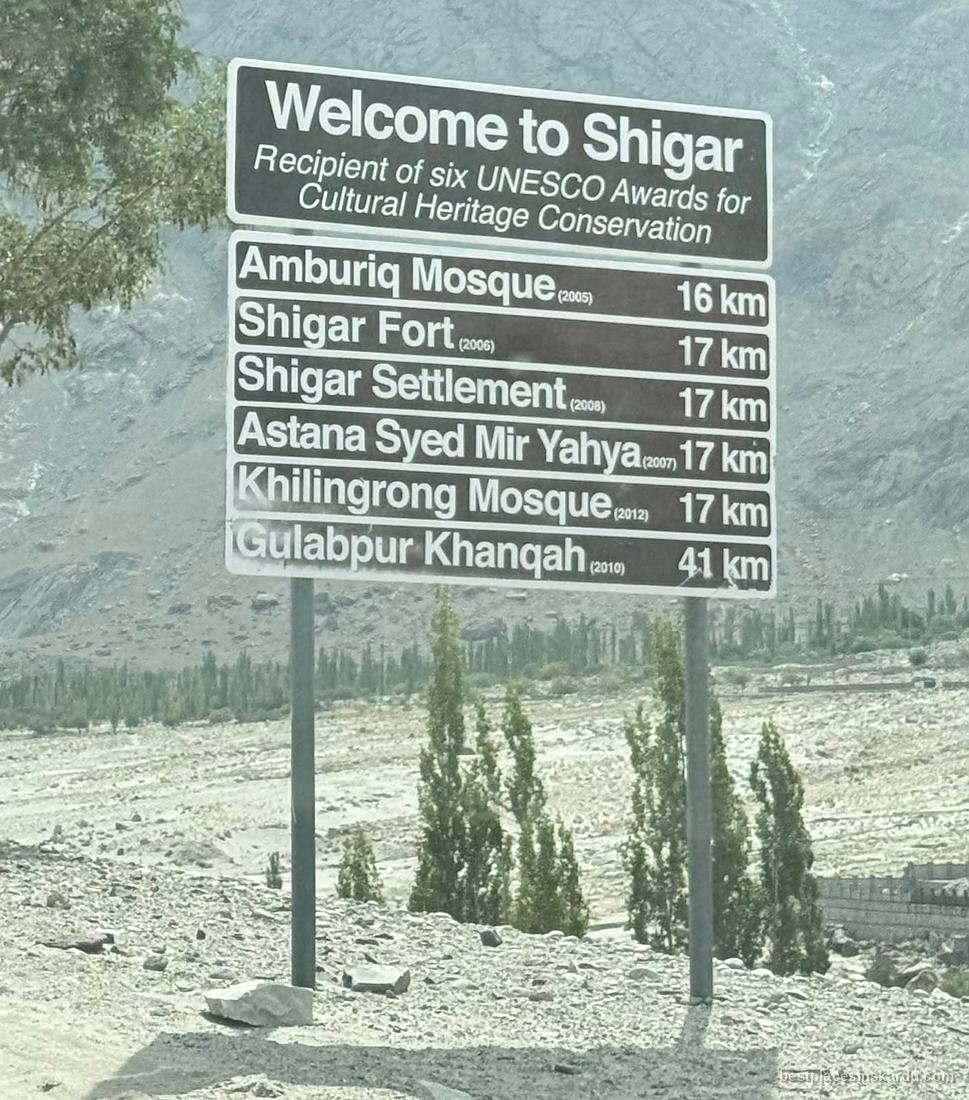
Shigar Fort, locally Fong Khar, "Palace on the Rock", was built by the Amacha dynasty, rulers of the Shigar kingdom, directly onto a giant boulder beside the Shigar stream. By the 1990s it had fallen into serious decay, with sections collapsed and the original woodwork deteriorating.
The Aga Khan Cultural Service undertook a full conservation programme between 1999 and 2004, at a cost of roughly US$1.4 million, working with local Balti craftsmen to reproduce traditional joinery and carving rather than substituting modern materials. The project won a UNESCO Asia-Pacific Heritage Award in 2006 and became the template for the later restoration of Khaplu Palace.
What it preserved is a construction method as much as a building: the fort's stone-and-timber cribbage walls are an indigenous earthquake-resistant technique developed over centuries in a seismically active region.
What you see inside
The museum rooms
The complex divides into the original 400-year-old fort structure built onto the rock, and the later Raja's palace section. Museum rooms display Balti household objects, agricultural tools, textiles and religious artefacts, with several rooms preserved as period interiors.
The carved wooden window screens and door frames are the detail worth slowing down for. The geometric patterns are specifically Balti, and distinct from the Kashmiri and Persian work found further south. Guided tours are usually available and worth taking; much of what makes the building significant is not self-evident from the rooms alone.
Entry fee and opening
Ticket prices here feed into our visit budget planner, which totals entry fees across every destination you pick.
| Detail | Information |
|---|---|
| Entry fee | PKR 800 per person for non-guests. Paid at the gate in cash. |
| Hotel guests | Complimentary access if you are staying at Serena Shigar Fort. |
| Payment | Cash only. See where to get cash in Skardu. |
| How long to allow | One to two hours for an unhurried visit including the gardens. |
| Best time of day | Morning, before tour groups arrive and while the light is good for photographs. |
| Photography | Permitted in the grounds and most museum rooms. Ask before photographing hotel guest areas. |
The PKR 800 figure is current as of 2026 and confirmed locally. Entry fees in Gilgit-Baltistan change without much notice, so treat it as close rather than guaranteed.
What is in each part of the complex
| Part | What it is | Worth your time? |
|---|---|---|
| Fong Khar (old palace) | The original 17th-century structure — the name means "palace on the rock" in Balti. Stone and timber construction built directly onto the boulder. | Yes — the reason to come |
| Museum rooms | Balti household objects, weapons, wooden carving, textiles and photographs of the restoration. | Yes — 30–40 minutes |
| The gardens | Terraced and irrigated by the same channels that feed the valley's orchards. Apricot and walnut trees. | Yes, especially in blossom season |
| Garden House & Old House | Now hotel rooms. Non-guests can see the exteriors. | Exterior only |
| The mosque | Small historic mosque within the complex, with carved woodwork. | Brief stop |
Staying at Shigar Fort
If the fort itself is beyond budget, the valley has other options — see where to stay around Skardu.
Staying inside the fort
Part of the complex operates as Serena Shigar Fort, a roughly 20-room heritage guesthouse where rooms occupy the restored palace, garden house and old house sections. Rates run approximately PKR 22,000–30,000 per night in peak season, and it is consistently the highest-rated stay in the region. See the full best hotels in Skardu comparison.
One practical caveat: these are historic buildings with stairs, narrow doorways and low lintels. Travellers with mobility limitations are better served by a modern city hotel.

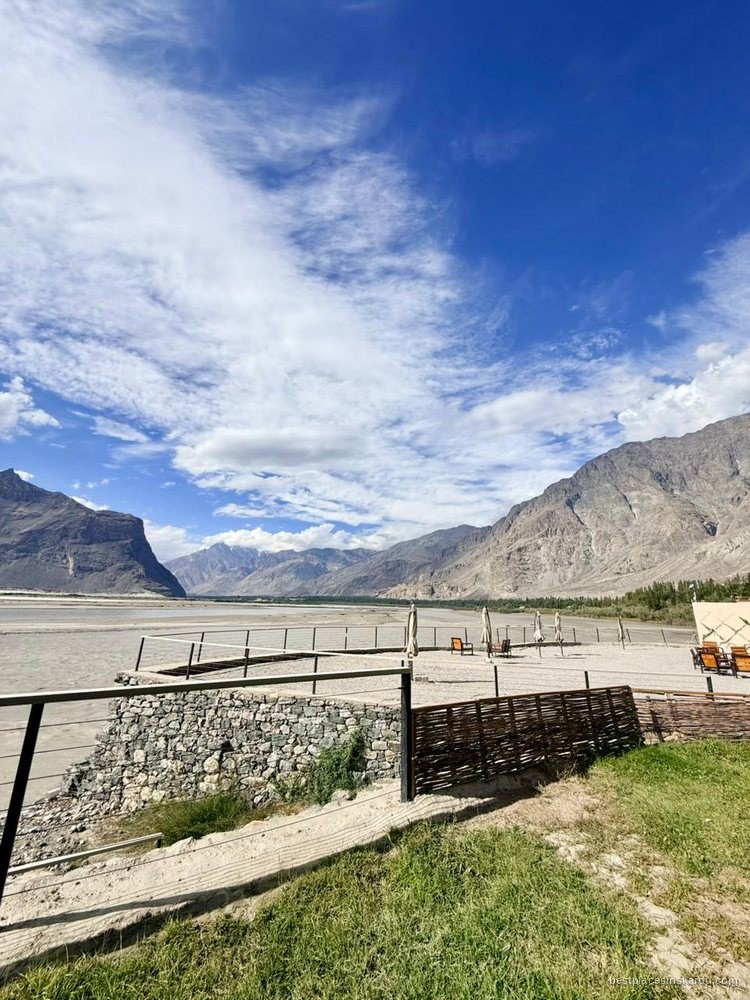
Shigar Valley beyond the fort


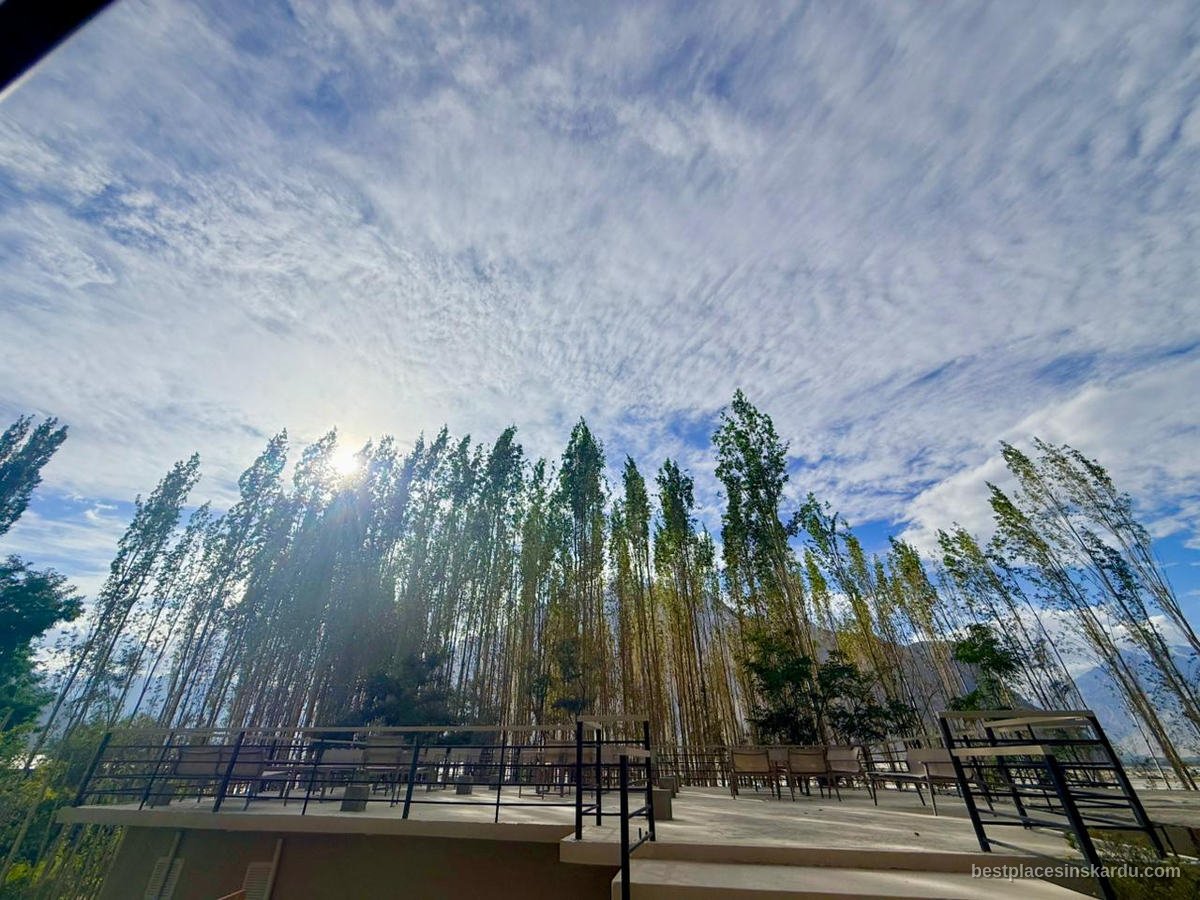
Orchards and the road to Askole
The valley is watered by the Shigar River and known for apricot, cherry and mulberry orchards, with irrigation channels running between the villages. It is also the road to Askole. The last settlement before the trailhead for K2 and the Baltoro Glacier, which gives Shigar a genuine end-of-the-map atmosphere that Skardu city has largely lost.
How to visit and what to combine it with
Getting to Shigar Fort from Skardu
| From | Distance | Time | Vehicle |
|---|---|---|---|
| Skardu city centre | 32 km | 45–60 min | Any car — the road is sealed |
| Skardu airport | 38 km | Around 1 hr | Any car |
| Sarfaranga Cold Desert | 12 km | 20 min | Any car to the fort |
| Askole (K2 trailhead) | Continue 95 km north | 6–7 hrs | 4×4 essential |
Shigar and Sarfaranga sit on the same road, which is why most visitors do both in one day. The fort in the morning and the dunes in the late afternoon works well — see the full distance table for other combinations.
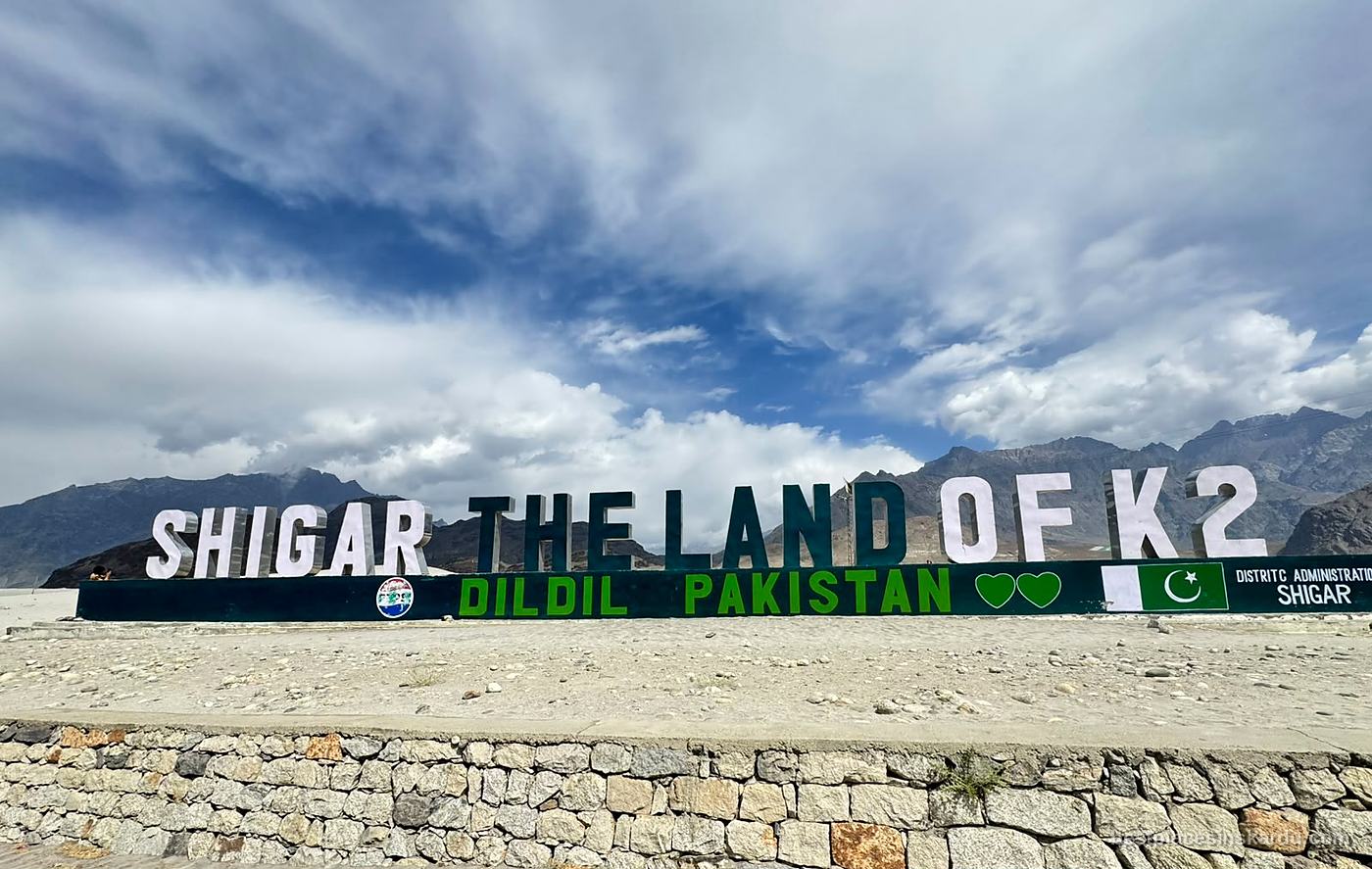
Driving times for this and every other sight are in our Skardu distance table, and the fort falls on Day 4 of our five-day plan.
Shigar Fort is about 32 km from Skardu city, roughly an hour on a sealed road that any normal car manages. Visit in the morning for quieter courtyards and better light on the woodwork, then continue to Sarfaranga Cold Desert for late-afternoon golden hour. That ordering matters. Reversing it gives you flat light at both.
This pairing forms Day 4 of our 5 day Skardu itinerary.
Shigar Fort has a counterpart three hours east: Khaplu Palace, the restored 19th-century royal residence of Khaplu. If you have time for both, see which one suits your trip in our Khaplu guide.
Frequently asked questions
What is the entry fee for Shigar Fort?
A modest museum and heritage ticket payable at the gate. Guests staying at the attached Serena Shigar Fort hotel typically have complimentary access.
How far is Shigar Fort from Skardu?
About 32 km, roughly one hour by road. The route is sealed and a normal car handles it. No 4x4 needed.
Can you stay overnight at Shigar Fort?
Yes. Part of the complex operates as Serena Shigar Fort, a roughly 20-room heritage guesthouse, at approximately PKR 22,000 to 30,000 per night in peak season.
How old is Shigar Fort?
The original structure dates to the 17th century, built by the Amacha dynasty. It was restored between 1999 and 2004 by the Aga Khan Cultural Service and won a UNESCO Asia-Pacific Heritage Award in 2006.
What does Fong Khar mean?
Fong Khar is the local Balti name for Shigar Fort and translates as 'Palace on the Rock', referring to the giant boulder the fort is built onto.