Quick answer: visiting Khaplu
- Distance: 103 km east of Skardu, 2.5–3 hours by road
- Elevation: 2,600 m
- Main sights: Khaplu Palace (Yabgo Khar) and Chaqchan Mosque
- Vehicle: a normal car manages it, the road is sealed for most of its length
- Stay overnight: the round trip alone is six hours, so a day trip wastes the place
Baltistan's second kingdom
Khaplu sits on the Shyok River, 103 km east of Skardu, and was historically the second-largest kingdom in Baltistan after Skardu itself. The Yabgo dynasty ruled from here and controlled a key stretch of the old caravan route toward Ladakh, which is why a town this size has a five-storey royal palace and a mosque of genuine architectural importance.
That road east is now closed at the Line of Control, and it gives Khaplu its particular atmosphere today: a town that used to be on the way to somewhere, and now isn't.

Khaplu Palace (Yabgo Khar)
The centrepiece is Khaplu Palace, locally Yabgo Khar, a five-storey fort-palace completed in 1840 and restored in 2011 by the Aga Khan Trust for Culture. The restoration won a Virgin Holidays Responsible Tourism Award in 2012 and a UNESCO Asia-Pacific Heritage Award in 2013.
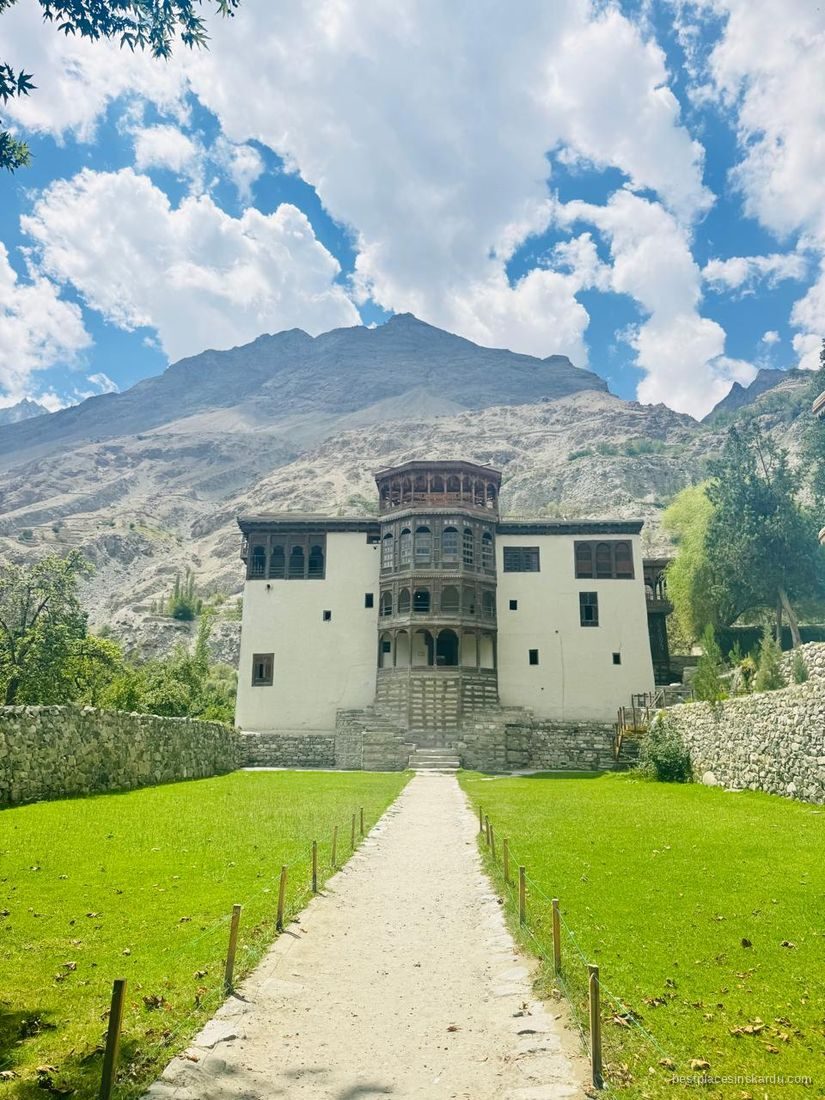
It operates today as a heritage hotel with around 21 rooms, but you do not need to be a guest to see it. Non-guests can generally tour the museum sections and courtyards for a ticketed fee. The architecture layers Balti, Tibetan and Ladakhi influences across five floors, and several of the heritage suites in the original palace section sleep up to four. Practical if you are travelling as a family and can accept low doorways and historic proportions.
Khaplu Palace vs Shigar Fort
Both are Aga Khan restorations of Balti royal residences, and travellers often ask which is worth the time. They are really different: Shigar Fort dates to the 17th century and is built onto a boulder, an hour from Skardu on the way toward Askole. Khaplu Palace is a later, larger 19th-century building with stronger Ladakhi influence, three hours east. If you only have time for one, Shigar is far more accessible. If you have a week, do both.
Chaqchan Mosque
A short walk from the palace stands Chaqchan Mosque, among the oldest in the region, with construction traditionally dated to the late 14th century. The architecture is markedly different from the Balti woodwork at Shigar. A blend of Kashmiri and Tibetan forms, with a tiered roof structure unlike mosque design anywhere else in Pakistan.
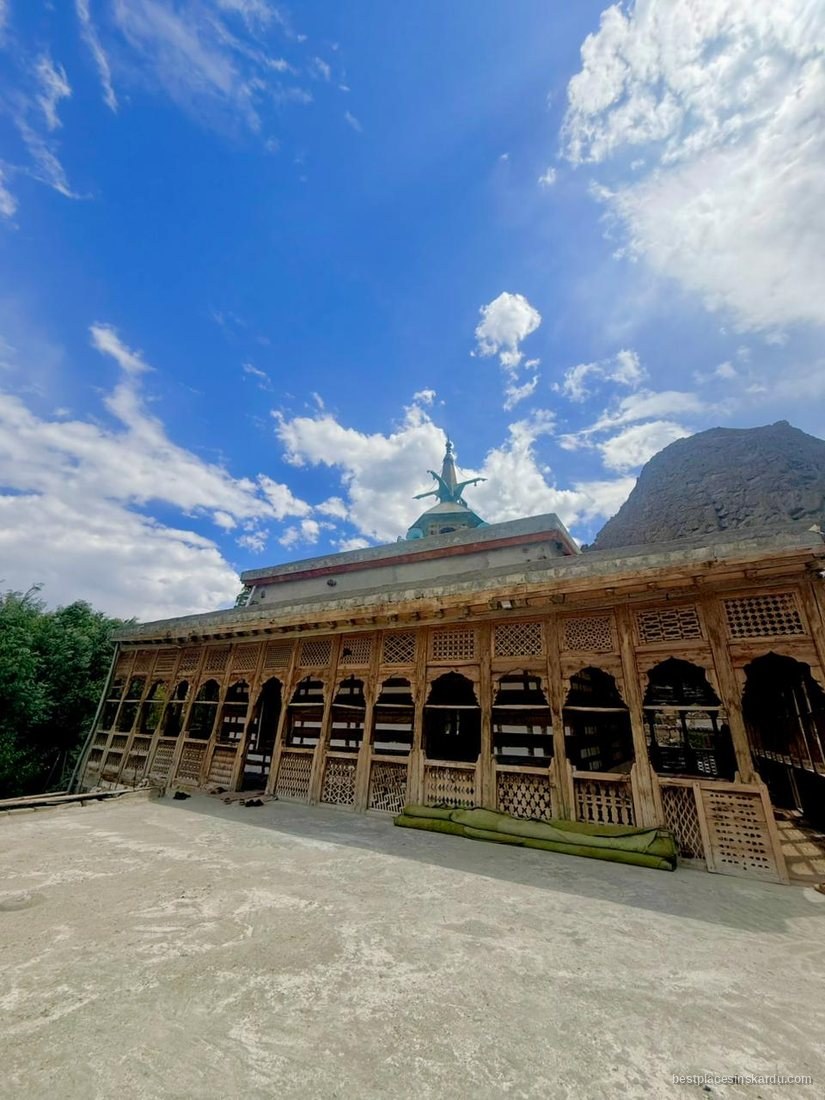
It remains an active place of worship, so dress and behave accordingly, and ask before photographing inside. The courtyard is usually open to visitors outside prayer times.
Getting to Khaplu from Skardu
See how Khaplu sits relative to everything else on our map of Skardu and driving distances.
| Detail | |
|---|---|
| Distance | 103 km east of Skardu |
| Drive time | 2.5–3 hours each way |
| Road | Sealed for most of its length, following the Shyok River |
| Vehicle | A normal car is fine, no 4x4 needed |
| Best as | An overnight stop, not a day trip |
The six-hour round trip is why a day visit makes little sense: you would spend more time in the vehicle than in Khaplu. See our Skardu map and distances for how it fits with everything else, and the itinerary guide for where it belongs in a longer trip.
Khaplu as a base for Hushe Valley
Khaplu is the practical staging town for trips further up into Hushe Valley, which is the approach to Masherbrum, K6, K7 and the Gondogoro Pass route toward Concordia, which some groups use as the return leg of the K2 base camp trek. Hushe sits at 3,180 m and is roughly another two to three hours beyond Khaplu on a rougher road that needs a 4x4.
Attempting Hushe directly from Skardu means a twelve-hour-plus round trip, which is why even non-trekkers who want to see the valley usually base a night in Khaplu first.
What to see in Khaplu, and what it costs
| Place | What it is | Hours | Rating | |
|---|---|---|---|---|
| Serena Khaplu PalaceChaqchan Road, Sargiab | Restored 19th-century royal residence, now a heritage hotel with a museum. Non-guests can tour it — reviewers consistently say the guided tour is worth doing. | Open 24 hrs (tours daytime) | 4.5 1,648 | Directions |
| Chaqchan MosqueChaqchan Road, Khaplu | Founded in 1370 by Ameer Kabir Syed Ali Hamdani. One of the oldest mosques in Baltistan, blending Tibetan, Mughal and Persian styles in carved wood. | 7am–10pm daily | 4.6 364 | Directions |
Serena Khaplu Palace is a UNESCO-recognised heritage property dating back roughly four centuries in its earliest form, restored by the Aga Khan Trust for Culture in the same programme that restored Shigar Fort. If you are staying, book a suite — reviewers note standard rooms are small. The restaurant draws consistent complaints about price relative to quality, so eat in the town if you are on a budget.
When to visit
Khaplu has its own handicraft traditions, though the densest cluster of shops is back in Skardu — see Chasma Bazaar and the other shopping areas.
Check current conditions here against every other stop on our live weather board, which covers nine locations side by side.
If you only have time for one heritage building, the 17th-century palace at Shigar is an hour from Skardu rather than three.
Roughly May through October. Autumn is particularly good here. Khaplu's apricot and apple orchards turn strongly in late September and October, and the town is quieter than the Skardu-side sights at that time of year. See the best month to visit Skardu for the full seasonal picture.
Practical notes
On the western side of Skardu, Sarfaranga's dune field is the other landscape worth a half-day.
Khaplu has three filling stations, but Hushe Valley has none — where to fuel up.
Guided trips into Hushe should use a DTS-licensed operator and guide. See how to verify one.
- Carry cash, ATM access in Khaplu is limited compared with Skardu city
- Mobile coverage is reasonable in town, patchy on the approach road
- Accommodation is limited, so book ahead in July and August
- Allow a full morning for the palace and mosque together, plus travel time
- The palace hotel is a historic building, stairs, narrow doorways, low lintels
If you would rather base yourself in Skardu and do Khaplu as a long day trip, compare options in our guide to the best hotels in Skardu.
Frequently asked questions
What is the distance from Skardu to Khaplu?
Khaplu is 103 km east of Skardu, roughly a 2.5 to 3 hour drive along the Shyok River road. The route is sealed for most of its length and a normal car manages it comfortably.
Can you visit Khaplu Palace without staying there?
Yes. Khaplu Palace operates as a heritage hotel, but non-guests can generally tour the museum sections and courtyards for a ticketed fee paid at the property.
How old is Khaplu Palace?
It was completed in 1840 by the Yabgo dynasty and restored in 2011 by the Aga Khan Trust for Culture. The restoration won a UNESCO Asia-Pacific Heritage Award in 2013.
Is Khaplu worth a day trip from Skardu?
Not really, the round trip alone is about six hours, so you would spend more time driving than visiting. An overnight stay makes far more sense, especially if you also want to see Hushe Valley.
What is Chaqchan Mosque?
One of the oldest mosques in Gilgit-Baltistan, traditionally dated to the late 14th century, a short walk from Khaplu Palace. Its tiered roof and timber lattice work blend Kashmiri and Tibetan influences rather than the Balti style seen at Shigar.
Khaplu Palace or Shigar Fort, which is better?
Shigar Fort is 17th century and only an hour from Skardu, so it is far more accessible. Khaplu Palace is a larger 19th-century building with stronger Ladakhi influence, three hours east. Choose Shigar if time is short; do both if you have a week.
Can non-Muslims enter Chaqchan Mosque?
Reviewers report that non-Muslims are not admitted inside Chaqchan Mosque, a decision made by the local community rather than a formal rule. The exterior, the 14th-century carved woodwork and the valley views from the grounds remain worth seeing. Practice has varied, so ask locally rather than assuming.
Is Khaplu Palace worth visiting?
Yes. Serena Khaplu Palace is a restored 19th-century royal residence rated 4.5 from over 1,600 reviews, with a museum and guided tours that non-guests can take. It was restored by the Aga Khan Trust for Culture in the same programme as Shigar Fort. If staying overnight, book a suite — standard rooms are reported as small, and the restaurant is expensive for what it serves.